
Every parcel that leaves your hands carries some risk. Vans get broken into, boxes get dropped, and sometimes goods vanish somewhere between collection and the doorstep with nobody able to explain how. That’s exactly what goods in transit insurance exists to cover.
Plenty of UK businesses have never checked whether they’re protected, or whose policy actually applies when something goes wrong. Here’s the plain-English version.
What Is Goods in Transit Insurance?
Goods in transit insurance, often shortened to GIT insurance, covers goods against loss, theft and damage while they’re on the move. Cover runs from the moment a driver collects your goods until they’re signed for at the other end, whether that’s a short hop across town or a longer haul by road, rail, air or sea.
It isn’t the same as the courier’s vehicle insurance. Van insurance protects the vehicle. GIT insurance protects what’s sitting in the back of it.
You’ve got two options here. Either you take out your own policy as the sender, or you rely on the cover your courier already carries. Most established UK couriers hold their own GIT insurance as standard, so your goods stay protected while they’re in the driver’s care. Limits and exclusions differ between providers, so ask exactly what’s included before you hand anything over.
What Does a Goods in Transit Policy Actually Cover?
A typical GIT policy covers physical damage during transport, theft from the vehicle, and damage that happens while goods are being loaded or unloaded. Losses from accidents and road incidents are usually included too.
What’s excluded matters just as much. Goods left in an unattended vehicle overnight, especially outside a locked compound, are commonly ruled out. Damage caused by poor packaging is another common exclusion, along with goods sitting in a warehouse rather than actively moving, and anything above the policy’s declared value limit.
Standard cover can fall short fast if you’re sending something fragile, valuable or awkward to pack. Some insurers offer add-ons for high-value goods, electronics or temperature-sensitive freight. Read the policy wording properly before you book, not after something’s gone wrong.
Do You Need Your Own Cover as a Sender?
There are two routes here. Rely on your courier’s own goods in transit insurance, or hold a separate policy of your own.
Most reputable UK couriers carry GIT cover that protects your goods against loss, theft and damage up to a set limit while they’re in transit. That limit varies a lot between providers, though. If you’re regularly moving stock worth several thousand pounds a shipment, check whether your courier’s cover actually stretches that far.
Your own policy starts to make sense once you’re sending high-value goods often, your goods fall outside what a standard courier policy covers, or you’d rather deal with your own insurer directly. For most everyday business deliveries, confirming your courier’s existing cover is the sensible first step.
Goods in Transit Insurance vs Hire-and-Reward Insurance
These two get mixed up constantly, but they cover completely different things.
Hire-and-reward insurance is taken out by the courier and covers the driver and vehicle for carrying goods commercially. Under UK operator licensing rules, a driver carrying goods for payment needs this cover in place before they can legally operate. You can check the requirements yourself on the government’s goods vehicle operator licensing guide.
Goods in transit insurance covers the cargo, not the courier or the van. A courier can be fully licensed and insured on the vehicle side and still hold no GIT cover at all, which would leave your goods completely unprotected if the van were broken into or written off in an accident.
Ask your courier directly. Do they hold GIT insurance, what’s the limit, and does it apply to what you’re sending? A courier worth using will answer without hesitation.
What To Check Before Sending High-Value or Fragile Goods
Some shipments need more thought before they leave your premises. Packaging comes up more often than businesses expect. Most GIT policies include a clause requiring adequate packaging, and if goods are damaged because they weren’t packed properly, insurers can and do decline the claim. Fragile items need proper cushioning and a sturdy outer box.
Declare a higher value at the point of booking if your goods are worth more than the courier’s standard cover limit. Most reputable couriers offer this, usually for a small extra charge. Standard per-consignment limits can be surprisingly low once you’re shipping anything genuinely valuable.
Check the exclusions too. Cash, precious metals, jewellery and perishables without specialist cover are commonly left out, and certain categories of electronics above a set value can be excluded as well. Ask about a specific extension before you book if what you’re sending falls into any of these.
Keep your paperwork. A purchase invoice or clear proof of value is what you’ll need if you ever have to make a claim, and without it, the whole process gets a lot harder.
How the Right Courier Cuts Your Risk From the Start
The single most effective thing you can do to protect a shipment has nothing to do with insurance. It’s choosing a courier that reduces the risk before goods ever leave your hands.
Shared van networks pass parcels through multiple handlers, depot sorting systems and split loads. Every extra pair of hands your goods pass through adds another chance for something to go wrong. Vehicle crime remains a real problem for operators too. Police recorded vehicle offences fell by 8% to 350,070 in the year ending March 2025, according to the Office for National Statistics, and that’s still hundreds of thousands of vehicle-related offences across the country in a single year.
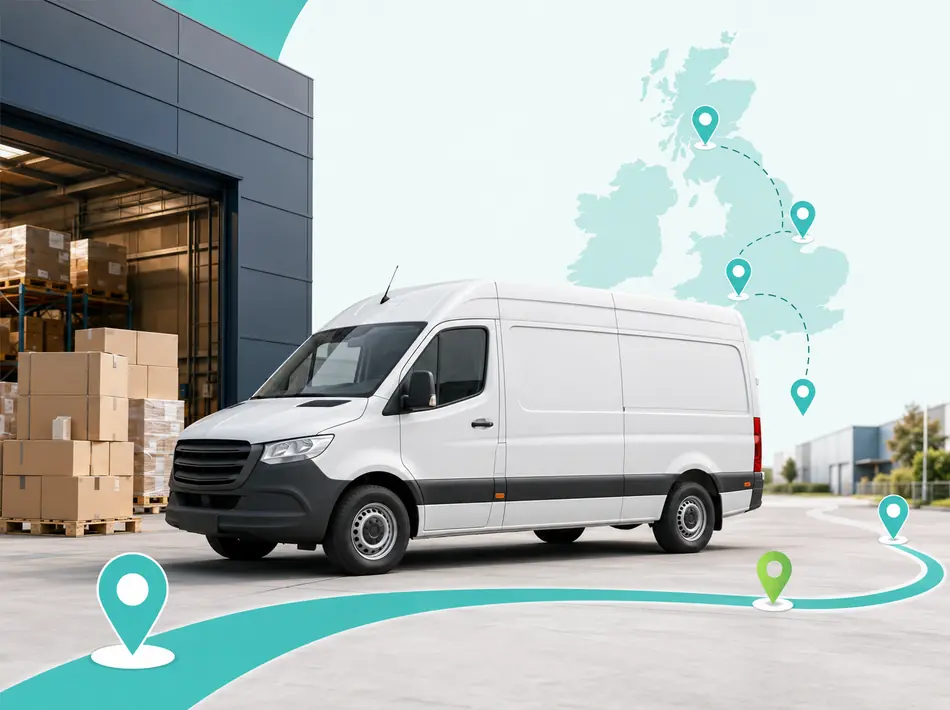
A dedicated vehicle works differently. Your goods get collected and driven straight to the destination, with nothing else going in alongside them. No depot stops, no repacking, no sharing space with someone else’s consignment. That single-handling approach shrinks the physical risk at every stage, and live tracking means you always know exactly where your goods are.
Flextro runs every job on a dedicated vehicle with full live tracking from collection through to arrival. Book a same-day courier for something that needs to move today, and your goods travel direct, with no shared handling and no unnecessary stops along the way.
That single-vehicle approach works the same everywhere Flextro operates. A pallet moving out of a London distribution unit travels exactly the same way as a single parcel crossing a smaller city.
The same goes for collections around Birmingham, or anywhere else on our nationwide network. Always a dedicated vehicle, always a driver who goes straight there.
If you’re regularly shipping anything fragile or high value, our guide on sending fragile and high-value goods by courier is worth reading alongside this one.
Frequently Asked Questions
How much does goods in transit insurance cost for a small UK business?
Basic GIT cover for a small business typically costs somewhere between £100 and £500 a year, depending on the value of goods you’re moving and how often you send them. Businesses handling higher-value or larger shipments regularly can pay more, sometimes upwards of £1,000 a year. Getting a few quotes based on your actual shipment values is the only way to know your real cost.
Is goods in transit insurance a legal requirement in the UK?
No, it isn’t. There’s no law requiring a UK business to hold goods in transit cover, whether you’re sending parcels through a courier or running your own delivery operation. Many clients and logistics partners ask for proof of cover before they’ll work with you, though, so it’s worth having in place even where it isn’t compulsory.
Does my courier’s own insurance already cover my goods?
Often, yes. Most established UK couriers carry their own goods in transit insurance, which protects your parcel while it’s in their care. Limits vary by provider, so confirm the per-consignment cap and whether it applies to what you’re sending before you book. Standard cover is usually fine for ordinary parcels and documents, but check directly for anything high in value.
What’s the difference between goods in transit insurance and hire-and-reward insurance?
Hire-and-reward insurance covers the driver and vehicle and is a legal requirement for anyone carrying goods commercially in the UK. Goods in transit insurance covers what’s being carried, not the vehicle itself. A courier can hold full hire-and-reward cover and still carry no GIT insurance at all, leaving your goods unprotected if something went wrong.
What happens if my goods are lost or damaged in transit?
Report the loss or damage to the courier as soon as you notice it, and check your goods against the delivery paperwork before signing where possible. You’ll usually need proof of value, such as a purchase invoice, to support a claim. The claim then goes through the courier’s own GIT insurer, or your own policy if you hold separate cover.
What’s usually excluded from a standard goods in transit policy?
Cash, precious metals, jewellery and live animals are commonly excluded outright. Perishable goods are typically excluded unless you’ve got specialist cover, and high-value electronics can be capped or excluded above a certain threshold. Damage caused by inadequate packaging is another common exclusion, so check the wording carefully if your goods fall into any of these categories.
The Bottom Line
Knowing what cover you’ve actually got is the whole game here. A lot of UK businesses assume their courier’s policy has them covered, then find out the limits don’t stretch far enough when something actually goes wrong.
Start simple. Ask your courier what their goods in transit insurance includes, check the limit against what you’re sending, and take out your own policy if there’s a gap. Working with a courier running dedicated vehicles and live tracking takes a big chunk of the problem off the table before insurance ever comes into it.
Get a quote from Flextro and see how we keep your goods moving safely from collection to delivery.

Written by
Fabian Oliver — Content Writer, Flextro
Fabian is a content writer at Flextro, a UK-based dedicated courier and same-day delivery company. He writes clear, practical guidance on courier services, logistics, and delivery for UK businesses — from same-day and emergency deliveries to pallet freight, eCommerce fulfilment, and contract runs. Drawing on the expertise of the wider Flextro team, Fabian helps business owners make smarter, safer decisions about moving their goods, without the jargon.