
One agreed schedule
Set the days, collection window and delivery points once. The run repeats to that plan instead of being re-explained and re-quoted every time.
Time-Critical
Business & Planned
Specialist Delivery
Urgent & Breakdown
Professional & Public
Trade, Retail & Events
A selection of our clients
Flextro works with organisations across healthcare, professional services, retail, housing, technology and other UK business sectors.








Contract courier service at a glance
A contract courier service handles repeat collections and deliveries on an agreed schedule. The route, frequency, collection windows, vehicle and delivery points are planned once and then run to that plan, instead of raising a separate booking every time the same movement is needed.
It suits supplier-to-factory runs, warehouse-to-branch replenishment, inter-office transfers, parts distribution, scheduled site deliveries and any other movement that repeats on a known pattern.
Why a scheduled run
When the same goods move between the same places on a known pattern, booking it fresh each time costs admin, invites errors and gives you no price you can plan around.
Set the days, collection window and delivery points once. The run repeats to that plan instead of being re-explained and re-quoted every time.
The route is planned around what you usually move, so capacity is right for a typical run rather than guessed job by job.
A scheduled run can serve one destination or a planned sequence of stops. Both are booked under the same arrangement.
Route changes, extra stops and holiday cover are handled by the same team that planned the schedule.
Delivery updates during the route and proof of delivery at each completed stop, recorded the same way each time.
Pricing is worked out for the route and frequency, so recurring transport becomes a predictable line rather than a series of ad-hoc invoices.
How it works
Five steps from the first enquiry to a route that operates without being re-arranged each time.
Give the collection point, destinations, frequency, load and any delivery windows or site access notes.
The route, timing, vehicle requirement and any access constraints are assessed against real journey times.
Operating windows, vehicle, stop sequence and the price for the run are confirmed before anything starts.
The dedicated vehicle works the agreed route on the agreed days, with updates as it progresses.
If volumes, stops or timings change, the route and pricing are reassessed around the new requirement.
Plan the requirement properly
Set realistic operating windows around site opening hours, loading time and the journey itself rather than a generic promise.
Share the typical volume, weight and pallet count, plus any loading bay or access restriction at either end, so the run is planned around the vehicle it actually needs.
Volume spikes, extra stops, bank holidays and urgent jobs outside the usual pattern should be agreed up front, not improvised on the day.
Customer feedback
Choosing the right arrangement
A contract only makes sense when there is a pattern to plan around. If the requirement changes every time, booking individually is usually the better answer.
The same movement happens on a known pattern — daily, weekly or to another agreed cycle.
The requirement is occasional, unpredictable or genuinely different each time.
Two words people mix up
They describe different things, which is why a route can easily be both.
What moves on a scheduled run
If it moves between the same places on a repeating basis and fits a van, it can usually be planned into a scheduled route.
Regular transfers between offices, professional services teams and agreed business locations.
Planned resupply from a warehouse or hub to shops, branches or depots.
Scheduled movement between suppliers, workshops, production sites and dealers.
Recurring pallet movements where a dedicated vehicle suits the volume and handling.
Goods needing a declared chain of custody. Confirm acceptance and handling before the schedule is agreed.
Repeat deliveries to construction, events, healthcare and other multi-site operations.
Two different models
Both move goods. They behave very differently once the movement repeats and the timing matters.
| Factor | Flextro contract route | Standard parcel network |
|---|---|---|
| Route | Planned around your collection and delivery points | Fixed network route through sorting hubs |
| Vehicle | Dedicated to your run | Shared with unrelated consignments |
| Handling | Loaded once, unloaded at your stops | Repeated sorting and transfers |
| Timing | Operating windows agreed with you | Network schedule, not yours |
| Stops | Single or multiple agreed destinations | One address per consignment |
| Changes | Route reviewed with you when needs change | Fixed product, limited flexibility |
| Evidence | Proof of delivery per completed stop | Standard network tracking |
| Contact | The team that planned your route | General customer service |
Comparison describes the dedicated contract model Flextro operates against typical shared parcel-network handling.
Vehicle matching
Five vehicle classes, matched to what a typical run actually carries rather than to the largest load you have ever sent. Send the dimensions, rough weight and quantity and Flextro will confirm which one the route needs.
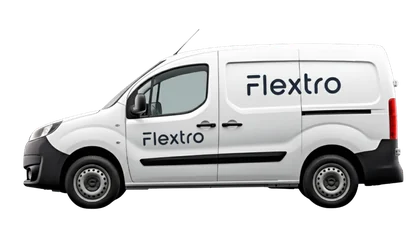
1.3 × 1.2 × 1.0 m
Documents, pouches and light parcels on frequent office or branch runs.
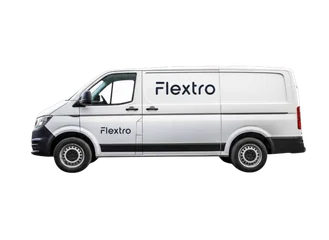
2.1 × 1.2 × 1.4 m
A practical choice for cartons, stock and regular urban or suburban routes.
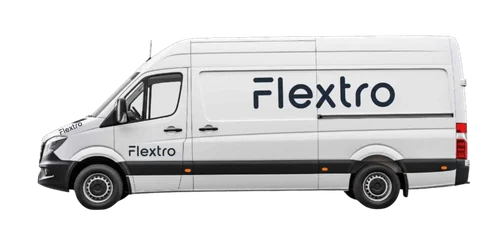
3.3 × 2.0 × 1.7 m
More room for stock, components and higher-volume scheduled distribution.
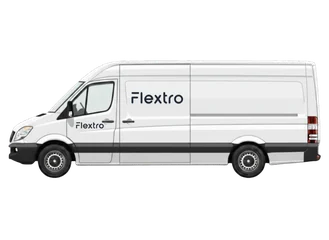
4.2 × 1.2 × 1.75 m
For longer or bulkier loads on recurring routes between fixed sites.
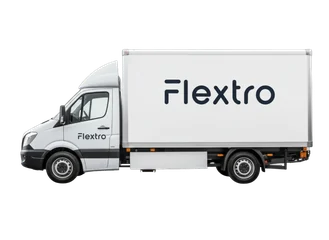
4.2 × 2.0 × 2.1 m
Suited to palletised and bulky freight on regular runs where access allows.
Send the dimensions, approximate weight and quantity a typical run carries. Flextro will match the vehicle to the load and confirm it before the schedule starts.
Help me choose a vehicleThe route brief already includes a “Not sure — help me choose” vehicle option.
Pricing
There is no single fixed price for a recurring route. Cost is worked out from three things: the route, the schedule and the load. Flextro confirms the price for the run before the schedule starts.
Updates, evidence and proof
A recurring route is only useful if you can see it working. Flextro provides updates while the run is live and records proof of delivery for completed stops in the same format every time.
You are told how the route is progressing rather than having to chase it.
Each completed drop is evidenced in the same format on every run.
Recurring routes build a repeatable delivery history you can reference later.
Illustrative workflow. Actual timings depend on the confirmed route requirement.
UK coverage
Flextro arranges scheduled routes across England, Scotland, Wales and Northern Ireland. Routes are assessed on their own merits rather than being limited to a fixed depot network.
One planned service for repeat movement between nearby sites or locations in different parts of the UK.
Early starts, late collections, weekends and bank holidays should be in the brief so availability can be confirmed.
If volumes, stops or operating windows change, the route and commercial arrangement can be reassessed.
Type a town or city to open its local coverage page, or start a quote for any UK collection and delivery postcode.
Not a recurring route?
A one-off consignment that must be collected and delivered today.
See same day courier →Collected today for delivery the following working day.
See next day courier →One collection and a planned sequence of delivery addresses.
See multi-drop delivery →Common questions
The practical questions businesses usually need resolved before setting up a scheduled route.
A contract courier service handles repeat collections and deliveries on an agreed schedule. The route, frequency, collection windows, vehicle and delivery points are planned once, then run to that plan — instead of raising a separate booking every time the same movement is needed.
The difference is planning. With a contract run the route, vehicle and timing are agreed in advance and priced for the pattern, so there is no re-quoting or re-explaining. Ad-hoc booking is better when the requirement is genuinely different each time.
Daily, several times a week, weekly, fortnightly, monthly or another agreed cycle. Flextro plans the schedule around when the movement actually needs to happen, including runs that only operate on certain weekdays.
Yes. A scheduled run can serve one destination or a planned sequence of stops. “Contract” describes the recurring arrangement; “multi-drop” describes a route with several destinations. The two are often combined.
There is no single fixed price. Cost is worked out from the route distance, number of stops, frequency, operating windows, the vehicle the load requires and any access or handling requirements. Flextro confirms the price for the run before the schedule starts.
Arrangements are built around the requirement rather than a fixed minimum term. Trial periods and short initial schedules can be discussed so the route can be assessed in practice before it is extended.
Tell Flextro and the route is reassessed. Volume changes, added or removed stops and altered operating windows can all be reviewed, along with the vehicle requirement and the pricing for the revised run.
Flextro does not assign a single named driver to a recurring route. What stays consistent is the route brief — site contacts, access requirements, loading bays and handover procedures are recorded with the schedule, so each run is worked to the same instructions.
These should be agreed when the schedule is planned. Some routes pause, some move to a different day and some continue as normal. Setting the rule in advance avoids a missed run on the day.
Early starts, evening collections, weekend runs and bank-holiday operation can be discussed. Availability and timing are confirmed for the specific route rather than promised generically.
Proof of delivery is recorded for completed stops on every scheduled run, in the same format each time, so recurring routes build a consistent delivery record.
Goods-in-transit cover applies subject to the relevant policy terms, limits and exclusions. Declare high-value, fragile, perishable, regulated or specialist goods before the schedule is agreed so suitability and any cover requirements can be checked.
Flextro arranges recurring routes across England, Scotland, Wales and Northern Ireland. Routes are assessed individually rather than being limited to a fixed depot network.
Send the collection point, destinations, frequency, load and any timing or access requirements. Flextro reviews the route, confirms the vehicle and price, and agrees the schedule before the first run.
Useful reading
Background on vehicle sizing, cover and route planning for UK business delivery.
Load length, weight and pallet capacity across the van sizes used on scheduled routes.
Read the guide →What cover typically includes, common exclusions and what to declare before a route is agreed.
Read the guide →How multi-stop routes are planned and why stop order and delivery windows change the run.
Read the guide →Ready to set up the route?
Flextro will review the route, match a suitable vehicle and confirm the schedule and price before the first run — with no commitment to send the brief.