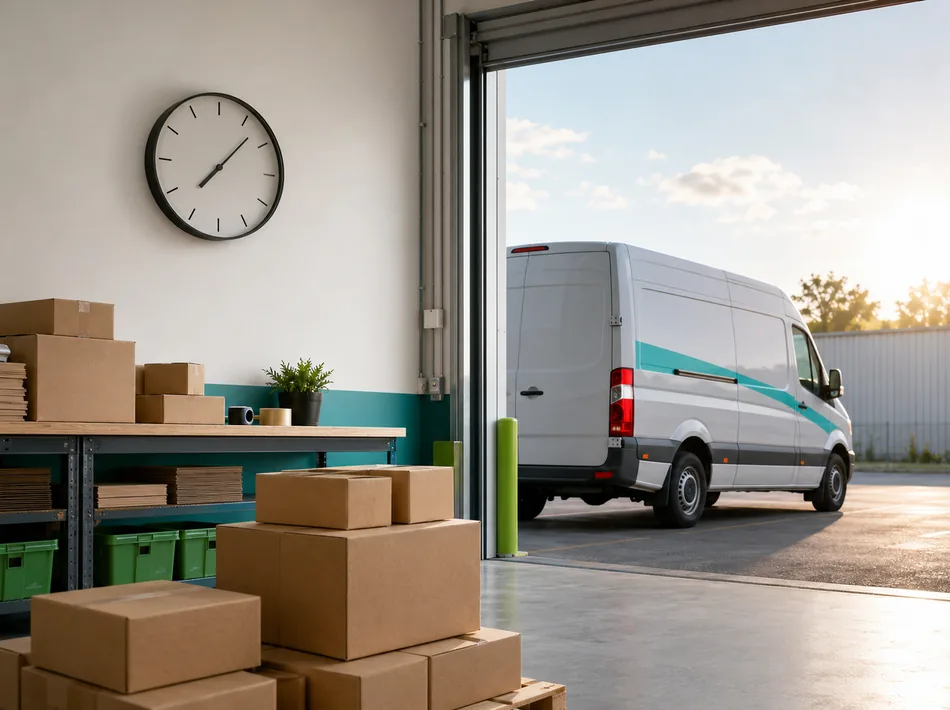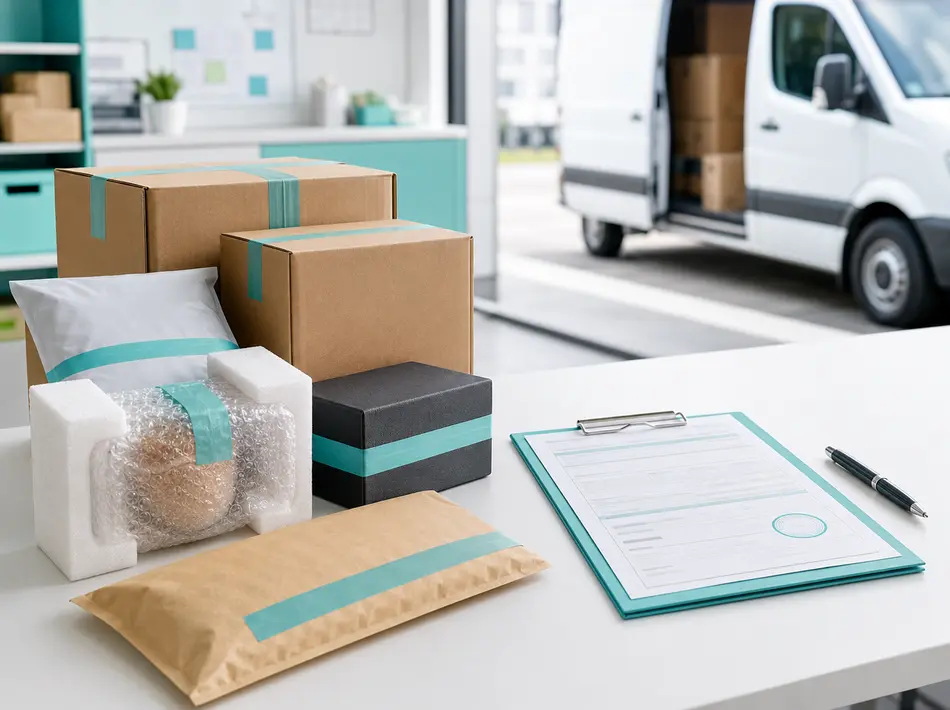
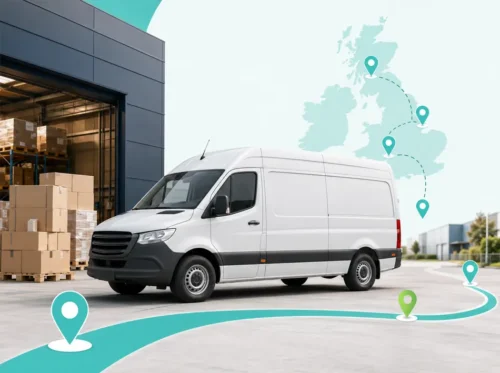
Twelve customers, one warehouse, one van leaving at eight in the morning. Every stop wants a different window, and by mid-afternoon your driver is still three drops from finished. Sound familiar? If you’re running a wholesale or distribution business anywhere in the UK, you’ve probably already worked out that booking separate deliveries for every customer doesn’t scale.
Standard parcel networks aren’t built for this. Your customers aren’t a single address on a label. They’re spread across a town, a county, or the whole country, and each one expects their order on time, in one piece, with proof it arrived. Buying and running your own fleet solves the problem on paper, but it ties up cash and pulls your staff away from the job you actually pay them to do.
This guide covers how multi-drop delivery works for wholesale and distribution businesses, what questions to ask before you book one, and how to get real value out of it once it’s running.
What Multi-Drop Delivery Actually Means
One vehicle, one collection, several destinations. That’s multi-drop delivery in a sentence. A driver collects your goods from a single point and works through a planned route, dropping at each address in turn and bringing back proof for every stop.
For a wholesaler, that usually means loading a batch of customer orders at your warehouse or distribution centre, then letting the driver take it from there. They follow the drop list in sequence, get a signature or scan at each stop, and move on to the next address.
Here’s the bit that matters most: your stock stays in one dedicated vehicle the whole time. It doesn’t get unloaded at a sorting hub, mixed in with parcels from other companies, or held up because someone else’s consignment turned up late. Whatever goes on the van that morning is what arrives at each customer that day.
Why Wholesalers Use It
Wholesale distribution creates a problem most general parcel services simply weren’t designed to solve. Parcel carriers are built around individual consignments from individual senders. You’re doing the opposite: multiple consignments from one point, going out to multiple recipients, each one needing its own record of delivery.
Multi-drop fits that pattern because it mirrors how wholesale actually operates. One collection point, several delivery addresses, mixed order sizes, and documented handover wherever the van stops.
Demand for that kind of flexible distribution isn’t standing still either. Output from the UK’s wholesale and retail trade sector rose by 2.0% in the first quarter of 2026 compared with the previous quarter, according to the Office for National Statistics’ Index of Services, one of the stronger-performing sectors in that release. Growth like that puts more pressure on distribution, not less.
Your orders won’t all look the same, and that’s fine. One customer takes a full pallet, another wants three boxes. Drivers who run multi-drop routes handle that kind of mixed load routinely, without it slowing down any single stop.
How the Process Works in Practice
It starts with a collection from your premises. You pick the vehicle size the job needs. Flextro runs Small Vans, SWB, LWB, XLWB, and Luton vans, so you’re not paying for a bigger vehicle than the load actually requires.
Once collected, the driver works the drop list in the order you’ve agreed. Every stop gets a time-stamped signature, and you can track the vehicle in real time to see exactly where it is and what’s already been delivered.
None of this needs to be a one-off booking. Plenty of wholesale businesses move to a contract courier run instead, where the same vehicle covers the same route on the same days every week. If your customers expect deliveries on a fixed schedule, that kind of reliability isn’t a nice extra. It’s the whole point.
When Multi-Drop Makes More Sense Than Other Options
Multi-drop isn’t the right call for every job. Here’s where it genuinely earns its place.
You’re delivering to five or more addresses from a single collection point. Fewer than that, and individual bookings might cost about the same. More than that, and a planned multi-drop route becomes noticeably cheaper and far easier to manage on your end.
Your customers need their delivery inside a specific window rather than “sometime today.” A standard parcel carrier gives you a wide slot because it’s juggling hundreds of consignments from dozens of senders. A dedicated multi-drop vehicle can work to a tighter schedule because it isn’t.
You’re moving stock that needs proper handling. Fragile goods, high-value items, anything that can’t just be left on a doorstep, all need a driver who takes responsibility at every drop. Keeping your goods in one vehicle from collection to final delivery makes accountability straightforward.
Vans now carry a growing share of this kind of work on UK roads. They covered 59.2 billion vehicle miles in the year ending March 2026, a rise of 1.1% on the previous year and 10.6% above pre-pandemic levels, according to Department for Transport figures, with vans now making up 17% of all motor vehicle traffic in Great Britain. UK road transport operators also have to work within legal limits on driving time, covered in the government’s guidance on drivers’ hours. A professional courier plans routes around those limits as standard, which is one more reason to book through an established provider rather than an informal arrangement.
What to Check Before You Book
A few questions are worth putting to any courier before you commit to a multi-drop service.
Do they provide proof of delivery at every stop? For a wholesale operation this isn’t optional. You need confirmation that each customer received their order, and you’ll likely need that record for invoicing or for settling the occasional dispute.
Can they actually handle your load? Multi-drop only works well when the vehicle suits the job. Ask whether they have the right size van and whether they’re used to your type of product. A vanload of glassware needs different handling to a run of flat-packed furniture.
Is there live tracking? GPS tracking lets you tell customers roughly when to expect their delivery, which means fewer calls landing on your team’s desk during the day. Flextro provides live GPS tracking as standard on every job.
Can they run it on a regular schedule? If you need weekly or twice-weekly cover, you want a courier with enough drivers to deliver that reliably, week after week. A same-day courier service with UK-wide coverage and round-the-clock availability is well placed to take on recurring wholesale routes.
Industries That Rely on Multi-Drop Distribution
Multi-drop delivery turns up across a wide spread of wholesale and distribution sectors. Food and drink suppliers use it to reach independent shops and hospitality venues on a set cycle. Office supplies distributors use it to restock multiple business sites. Building materials suppliers use it to get products to construction sites from a central depot. Healthcare consumables suppliers use it to reach clinics, care homes, and medical practices across a region.
Each of those sectors brings its own requirements. Food and drink often needs a temperature-controlled vehicle. Building materials might call for a Luton van with a tail-lift. Healthcare consumables need careful, documented handover at every single stop.
If your products or your customers have specific requirements, mention them when you book. A courier worth using will tell you straight away whether they can meet them, or point you towards a different vehicle or service that fits the job better.
Setting Up a Regular Wholesale Distribution Run
Plenty of wholesale businesses start small, with a single multi-drop booking to test a route or get through a busy patch. Once it proves itself, they switch to a regular schedule.
A scheduled run is agreed upfront: the route, the number of drops, the vehicle size, and the collection time are all fixed in advance, so your team isn’t rebooking week after week. The same driver often ends up covering the same route, learning the customers, the site access, and anything else that affects the job. That familiarity cuts down on errors and keeps things running smoothly.
For businesses with several regular routes or high delivery volumes, a trade account makes life easier still. Billing is consolidated, repeat bookings take seconds, and you get one point of contact for your courier work. Details on how that works are on the Flextro trade account page.
Frequently Asked Questions
What is multi-drop delivery and how does it work for wholesale businesses?
Multi-drop delivery means one vehicle collects goods from your premises and delivers them to several customers or locations during a single run. The driver loads at your warehouse, works through a planned route, and provides proof of delivery at each stop. Because the vehicle is dedicated to your load, your goods don’t mix with other companies’ consignments or pass through a shared depot.
How many drops can a courier handle in a single run?
That depends on the distances involved, the time needed at each stop, and legal driver hours limits. Short urban routes can fit in more drops than long inter-city runs. A good courier plans the route so it’s achievable within working-hours rules while still giving every stop proper attention.
Do I need proof of delivery at every stop?
Yes, and most professional couriers include it as standard. At Flextro, every drop gets a time-stamp and signature, giving you a clear record of what was delivered and when. That matters in wholesale especially, where your invoicing and customer records depend on accurate delivery confirmation.
Can I set up a regular weekly distribution run?
Yes. Many wholesale businesses run a contract courier route for their regular deliveries. You agree the schedule upfront and the courier covers the same route on the same days each week. A trade account simplifies billing and removes the need to rebook every single time.
What size vehicle do I need for a multi-drop wholesale run?
That comes down to the volume and weight of your load. Flextro operates Small Vans, SWB, LWB, XLWB, and Luton vans, so you can match the vehicle to each job. If your load changes from week to week, you can adjust the vehicle at the time of booking rather than being locked into one fixed size.
Can a multi-drop courier handle fragile or high-value wholesale stock?
Yes. Because your goods travel in a dedicated vehicle rather than through a depot or shared hub, the risk of damage or loss is lower than with a standard parcel network. The driver stays responsible for the load from collection through to the final drop, with proof of delivery provided at every stop.
Getting Started
Running distribution across several customer sites puts genuine pressure on your logistics, whatever you’re supplying. Whether you’re reaching independent retailers, business customers, or your own branch network, getting stock out reliably and on time is what keeps those relationships intact.
Multi-drop delivery gives you a structure for doing that without buying your own fleet or juggling a patchwork of individual parcel bookings. Done properly, it’s one of the most cost-effective ways to distribute from a single collection point.
Flextro collects from 95% of the UK within 60 minutes of booking, runs 24 hours a day, 365 days a year, and provides live GPS tracking with proof of delivery on every job. If you’d like to talk through setting up a route or a regular run for your business, get a quote and we’ll work out what suits you.
Trade distribution has its own rhythm. Wholesale courier services covers trade runs and urgent restocks.

Written by
Fabian Oliver — Content Writer, Flextro
Fabian is a content writer at Flextro, a UK-based dedicated courier and same-day delivery company. He writes clear, practical guidance on courier services, logistics, and delivery for UK businesses — from same-day and emergency deliveries to pallet freight, eCommerce fulfilment, and contract runs. Drawing on the expertise of the wider Flextro team, Fabian helps business owners make smarter, safer decisions about moving their goods, without the jargon.