Nobody rings the office at 4pm expecting a delivery crisis. It happens anyway, and when it does, the businesses that stay calm are the ones with an emergency delivery plan already sitting in a drawer somewhere. Everyone else scrambles for hours while the clock runs down.
Why Delivery Disruptions Catch UK Businesses Off Guard
Most businesses treat their delivery arrangements as settled. A regular carrier handles the collections, everything runs to plan, and nobody gives much thought to what happens when it doesn’t.
Supply chain disruption is more common than most people assume. According to the Office for National Statistics, 21% of UK businesses with ten or more employees said in August 2026 they were concerned about shipping disruption hitting their supply chain over the next year, up 12 percentage points on the year before. That’s a lot of businesses one missed collection away from a genuine problem.
When your regular carrier fails to collect, you have two options. Either you already have a backup in place, or you spend the next two hours on hold while your deadline gets closer. This guide exists to make sure you’re in the first group.
Step 1: Build Your Emergency Delivery Plan by Mapping the Risk
Before you can put together an emergency delivery plan, you need to know where the risk actually sits in your current setup.
Start by writing down every scenario that could leave you without a collection when you need one. Your regular carrier might cancel. A supplier could miss its despatch window. Your van might break down, or a driver could call in sick with no warning. None of this is unusual. Each one needs a different response, though.
Next, work out how sensitive each delivery is to timing. Not everything that goes wrong turns into a crisis. Some deliveries have flexible windows. Others carry a hard deadline, whether that’s a court filing, a part holding up a production line, or a client waiting for the job to land by close of business. Knowing which is which before anything goes wrong is the whole foundation of a solid plan.
Step 2: Put Names to Your Time-Critical Deliveries
This step takes about twenty minutes, and most businesses never get round to it.
Go through a typical week of deliveries in and out of your business. For each one, ask a simple question: if this doesn’t turn up when expected, how fast does it start costing money? Anything where the answer is within the hour, or by the end of the day, goes on your critical list.
Legal and compliance documents often carry court or regulatory deadlines, and a late court bundle delivery can push a hearing back. Manufacturing and automotive firms rely on parts that stop the line the second they go missing. Healthcare and pharmaceutical businesses can face real patient care consequences when a consignment runs late. Retail businesses sending stock to events or pop-up locations often can’t recover from a missed slot at all.
Once you’ve got your list, give it a proper home. It needs to live somewhere your whole team can find it, not buried in the inbox of whoever usually deals with logistics.
Step 3: Line Up a Dedicated Emergency Courier Before You Need One
This is where most businesses trip up. They wait until the emergency has already landed, then try to find a courier they can trust while the pressure’s on.
Standard parcel networks aren’t built for genuine emergencies. A driver running eighty drops on a shared van works to a fixed route. Miss the cut-off and your parcel simply waits. That’s just how the model works.
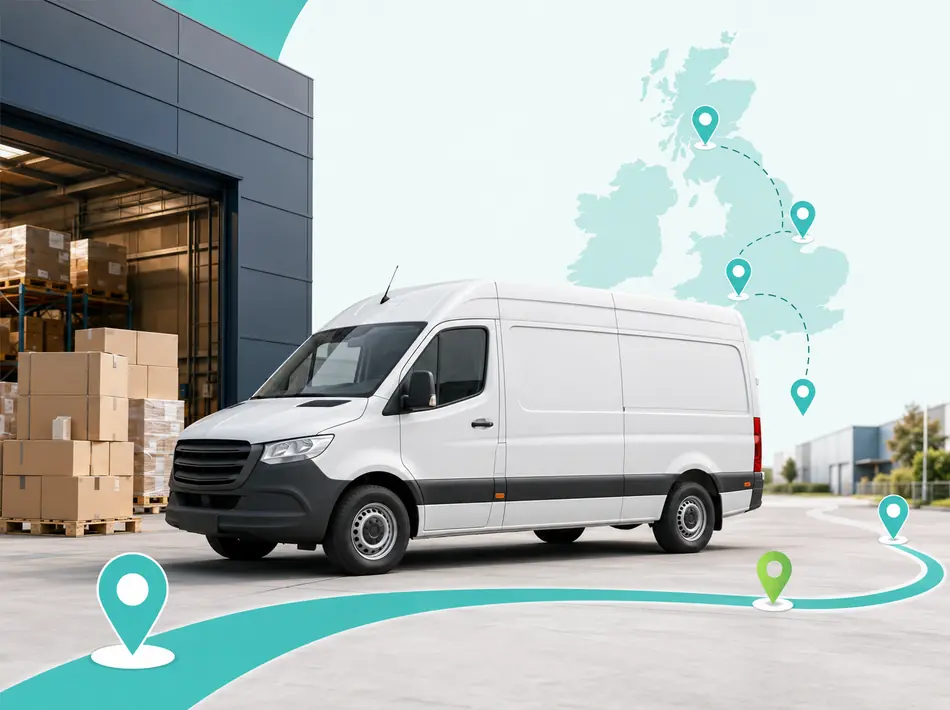
A dedicated emergency courier works differently. One vehicle, one collection, one destination. Your goods travel direct from A to B, with no depot stops and no other consignments slowing things down. Flextro’s emergency courier service collects from 95% of the UK within 60 minutes of booking, 24 hours a day, 365 days a year.
That coverage holds whether you’re booking a same-day collection in London or a rural pickup two hours from the nearest depot. The vehicle comes to you either way.
When you’re choosing a provider to keep on standby, check three things. Are they available around the clock? Do they use dedicated vehicles? And will they give you a clear price upfront, before the collection happens? Transparent pricing matters most when you’re booking in a hurry.
Step 4: Open a Business Account Before You Need It
This is probably the most practical step in this whole guide, and it’s the one most businesses skip.
When a crisis hits, the last thing you want is to be filling in registration forms and waiting for account confirmation before you can even book a collection. Setting up a courier trade account in advance takes a few minutes when you’re calm. Under pressure, that same process can feel like an hour.
Having an account in place also means you already know your pricing structure. If you’ve never used an emergency courier before, the cost difference compared with a standard parcel service can catch you off guard. Knowing what to expect means you can get budget approval fast, rather than spending twenty minutes convincing a finance manager it really is that urgent.
Step 5: Brief Your Team So Anyone Can Book
A plan that only one person knows about isn’t really a plan. What happens when that person’s on holiday, stuck in a meeting, or the one who’s called in sick?
Write down the account login, the contact number, and the information your team needs ready before they book: the full collection address, the full delivery address, the parcel’s size and weight, any access instructions, the nature of the goods, and the latest time it can arrive.
Put it somewhere accessible. A shared operations folder, a laminated sheet in the warehouse, a pinned message in the team chat, it doesn’t matter which. What matters is that any member of staff can book an emergency courier without having to ask three people first.
Step 6: Use Scheduled Runs to Cut Your Emergency Risk
The best way to handle a delivery emergency is to make one less likely in the first place.
Businesses running contract or scheduled courier runs work to a reliable, pre-agreed timetable instead of hoping one carrier turns up on an ad hoc basis. When your operations run on a predictable schedule, you get more warning when something’s about to go wrong, and more time to activate your backup plan.
Curious how that works in practice? Our guide to how scheduled courier runs work breaks down the booking pattern in more detail.
If you move palletised freight, it’s also worth checking whether your emergency courier can handle pallets at short notice. Flextro’s same-day pallet delivery service covers time-critical pallet consignments with dedicated vehicles, something standard pallet networks rarely offer.
We run this service nationwide, from Manchester and the wider North West through to the south coast, so wherever your pallet needs to land, the vehicle stays dedicated to it alone.
Frequently Asked Questions
What should an emergency delivery plan include?
At a minimum, it should name your time-critical deliveries, identify a reliable emergency courier provider, confirm how your team books and pays, and list what information staff need on hand. Write it down, keep it somewhere accessible, and review it once a year.
How quickly can an emergency courier collect in the UK?
With Flextro, collection typically happens within 60 minutes of booking across 95% of UK postcodes. The service runs 24 hours a day, every day of the year. Dedicated vehicle couriers collect far faster than parcel networks, which work to fixed route schedules.
Is an emergency courier more expensive than a standard service?
Generally, yes. A dedicated vehicle travelling direct from collection to destination costs more than a shared van working a fixed route. A good provider gives you a transparent price before you confirm the booking. Setting up a business account in advance means you already know the cost structure, so you can make the call fast instead of chasing approval under pressure.
Can an emergency courier handle large or heavy items?
Yes. Flextro runs vehicles from a small van through to a Luton, so bulky or heavy consignments are covered the same day. Same-day pallet collection is available too, if that’s what you need.
What’s the difference between a same-day and an emergency courier?
A same-day courier collects and delivers within the same calendar day. An emergency courier usually offers collection within the hour and is built for the most time-critical situations. Both use dedicated vehicles rather than shared parcel networks, so your goods travel direct with no depot stops either way.
How do I choose the right emergency courier for my UK business?
Look for 24-hour availability, dedicated vehicles, live GPS tracking, proof of delivery, and transparent pricing, plus how quickly they can collect from your location. Check whether they offer a business account too. Reading independent reviews and confirming whether an on-time guarantee is in place will help narrow things down.
Your Emergency Delivery Plan in Short
Every business hits a moment when a delivery simply can’t wait. The ones that come through it with the least disruption are the ones that planned for it before it happened. Map your risks, name your critical deliveries, choose your emergency courier, open your account, and brief your team. None of that takes very long.
Ready to get started? Get a free, no-obligation quote from Flextro’s emergency courier service.
Or open a trade account now, so you’re ready the next time it happens.
Production sites plan for this in advance. Manufacturing courier services covers line-down parts and tooling.

Written by
Fabian Oliver — Content Writer, Flextro
Fabian is a content writer at Flextro, a UK-based dedicated courier and same-day delivery company. He writes clear, practical guidance on courier services, logistics, and delivery for UK businesses — from same-day and emergency deliveries to pallet freight, eCommerce fulfilment, and contract runs. Drawing on the expertise of the wider Flextro team, Fabian helps business owners make smarter, safer decisions about moving their goods, without the jargon.