Booking three or four separate couriers when your goods are heading to different addresses is more common than it should be. It costs more, it takes longer to organise, and you end up chasing several tracking numbers instead of one. A multi-drop courier service solves this by combining every stop into a single dedicated run. Here’s how it compares with single deliveries, and which option makes more sense for your business.
What Multi-Drop Delivery Means and How It Differs from Single-Point Couriers
A single-point courier does one job: collect from one place, deliver to one address. That’s exactly what you want when there’s only one recipient.
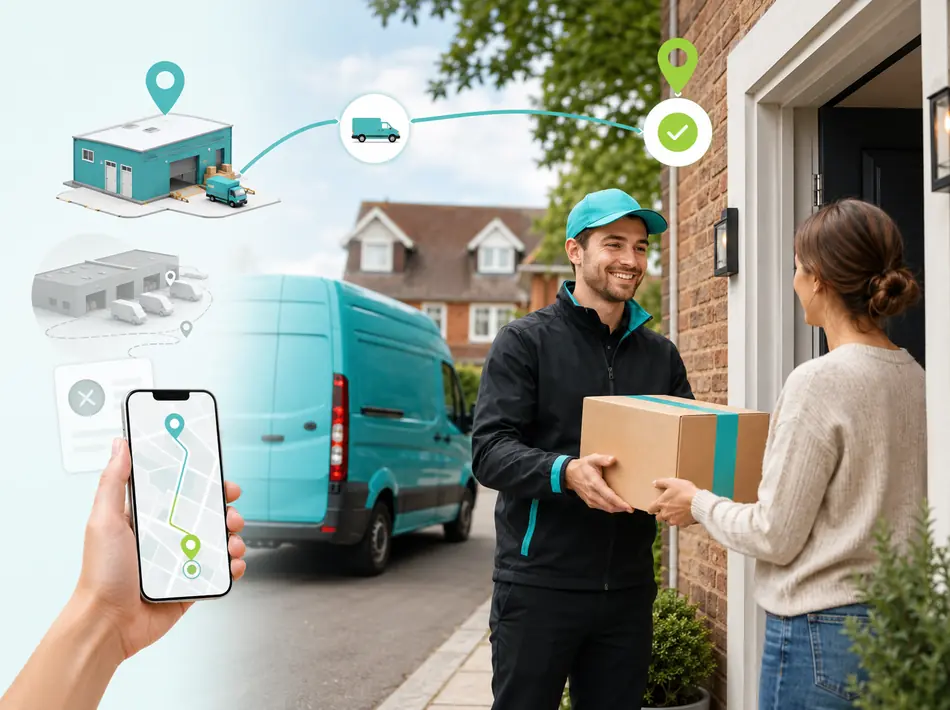
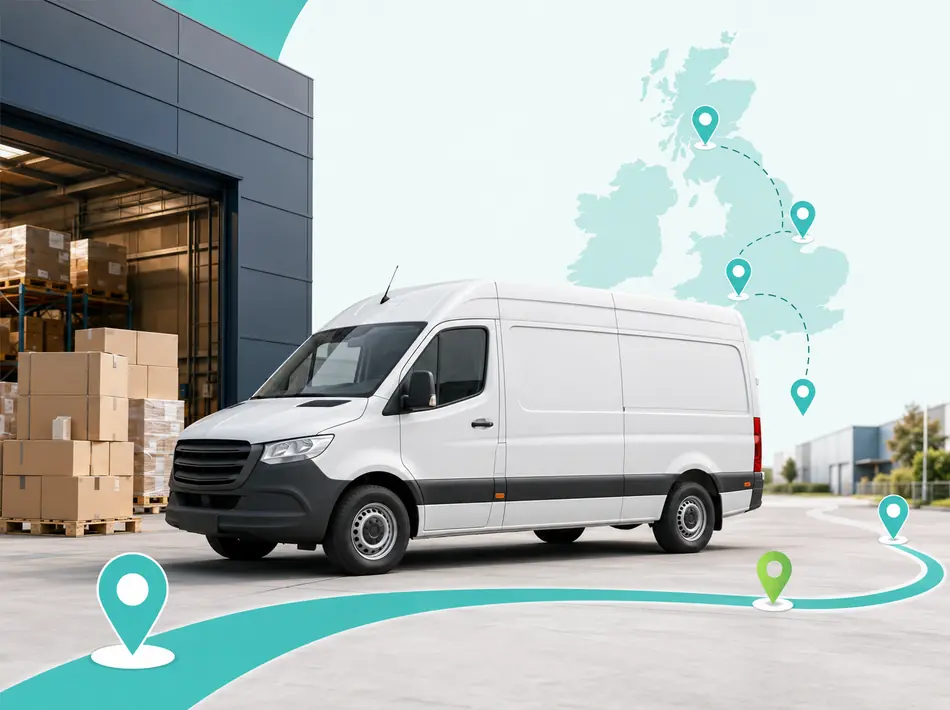
Multi-drop delivery is built for a different situation. A dedicated vehicle collects from your premises and works through two or more delivery addresses on the same run, with the driver getting proof of delivery signed off at every stop before moving to the next.
The real difference sits in how the job gets priced and planned. A single-point booking means one collection and one delivery. A multi-drop job means one vehicle and one driver covering several stops in the same movement, and that changes the maths considerably.
When Multi-Drop Saves You Money
This is where most businesses get it wrong. There’s an assumption that multi-drop only suits large logistics operators, but that isn’t true.
If you’re sending goods to two or more addresses in the same area on a regular basis, you’re already a strong candidate. Three stops across one city will often come in cheaper on a single multi-drop booking than three separate collections would.
Here’s the reasoning. Every individual booking carries its own base charge, delivery fee and fuel cost. Add those up across four or five separate jobs and the total climbs quickly. A multi-drop booking spreads one vehicle, one driver and one fuel cost across every stop instead.
Wholesalers, retailers restocking several branches, and tradespeople supplying multiple job sites tend to see the biggest savings. The more stops you can fit into one run, the stronger the case for going multi-drop.
What Booking Separate Single Deliveries Really Costs You
The courier charge itself is the obvious cost. It isn’t the only one.
Every separate booking eats into someone’s time. Requesting quotes, entering addresses, confirming collections and tracking multiple jobs adds up fast when you’re managing ten bookings instead of one.
There’s a cost on the receiving end too. If you’re supplying three shop locations, each site is left waiting for its own delivery window. Multi-drop lets you confirm arrival times at every stop in advance, so your contacts know exactly when the driver’s turning up.
Missed deliveries push costs higher still. Rebooked jobs, failed first attempts and time spent chasing updates all shrink once you’re running one planned route instead of several bookings that don’t talk to each other.
Recent figures from the Office for National Statistics show transport costs are becoming a bigger headache for UK businesses trading across the country. In early 2026, 19% of firms selling goods or services to other UK nations named transport costs as a challenge, the highest share since January 2023, according to ONS Business Insights and Conditions Survey data. Cutting the number of separate bookings you run is one of the more straightforward ways to bring that cost down.
How Multi-Drop Routes Are Planned and Tracked in Real Time
Good multi-drop planning happens before the driver even leaves the yard. Book a multi-drop delivery service with Flextro and you share your collection address, every delivery stop, and any time windows you need. We plan the route, assign the right vehicle, and get the driver moving on schedule.
Every stop generates its own proof of delivery. The driver confirms each handover and updates the job as they go, so you can follow the vehicle from collection through to the final drop without picking up the phone. Road transport remains the backbone of how goods move around the country. GB-registered HGVs alone lifted 1.53 billion tonnes of freight in 2025, according to domestic road freight statistics published by the Department for Transport.
If a recipient isn’t there when the driver arrives at one stop, we contact them directly and carry on with the rest of the run. No other stops are held up, because no other customer’s goods share the vehicle.
Regular Routes: When a Contract Run Makes More Sense
If you need multi-drop deliveries on the same days every week, a scheduled contract run takes the admin out of the equation completely.
A contract run is a fixed arrangement where the same route runs on a pre-agreed schedule. The stops, the contacts and the arrival windows are all locked in from the start, so nobody’s rebooking the same job every week.
Manufacturers supplying several assembly sites, distributors restocking retail chains, and businesses managing regular inter-branch deliveries tend to be the best fit for contract runs. The cost per delivery usually comes down against ad hoc bookings, and the consistency means fewer surprises for everyone involved.
Which Option Is Right for Your Business?
Neither option wins outright. It depends on how often you send, to how many addresses, and whether your volumes follow any kind of pattern.
Sending to multiple stops a few times a month with no fixed routine? A same-day courier booked as a multi-drop job is probably your best fit. Book it when you need it, confirm your stops, and a dedicated vehicle handles everything from collection to the last drop.
Running the same route every week? A contract run will save you money and take the rebooking off your plate.
Only ever sending to one address? Single-point booking is still your answer. There’s nothing to gain from combining jobs that don’t share a sensible route.
The fastest way to see which option suits you is to request a quote for both and compare them side by side. Share your addresses, your volumes and your schedule, and you’ll have a clear answer in front of you.
Frequently Asked Questions
How many stops can a multi-drop delivery cover?
There’s no fixed limit. Most multi-drop runs cover somewhere between two and ten stops, though larger runs can be arranged depending on the route and the vehicle. Tell us your full list of stops when you request a quote and we’ll confirm what’s possible.
Is multi-drop courier cheaper than booking separate deliveries?
In most cases, yes. One vehicle covering several stops usually costs less than booking a separate courier for each address. The saving grows as the number of stops increases and can add up fast for businesses sending to five or more locations regularly.
Can I track each individual stop on a multi-drop run?
Yes. You get live GPS tracking from collection right through to the final delivery, plus proof of delivery for every single stop on the route.
What happens if no one is at one of the delivery addresses?
The driver contacts the recipient directly. If the handover can’t go ahead, we record the stop and let you know straight away, and the rest of the run continues without delay.
Can I book a multi-drop delivery for the same day?
Yes. Flextro collects from 95% of the UK within 60 minutes of booking, any time of day, every day of the week. Same-day multi-drop bookings can usually be arranged when timing allows.
How do I get a quote for multi-drop delivery?
Get in touch with your collection address, delivery stops and any time windows you need, and we’ll come back with a clear quote and no hidden costs. The price you’re given is the price you pay.
The Short Version
Multi-drop courier services and contract runs both earn their place. Which one’s right for you comes down to your volumes, your schedule and how often you’re sending to more than one address. Most UK businesses delivering to two or more locations regularly find multi-drop works out cheaper and far less hassle than managing separate bookings. Want to see what the numbers look like for your own route? Get in touch with Flextro for a no-obligation quote.

Written by
Fabian Oliver — Content Writer, Flextro
Fabian is a content writer at Flextro, a UK-based dedicated courier and same-day delivery company. He writes clear, practical guidance on courier services, logistics, and delivery for UK businesses — from same-day and emergency deliveries to pallet freight, eCommerce fulfilment, and contract runs. Drawing on the expertise of the wider Flextro team, Fabian helps business owners make smarter, safer decisions about moving their goods, without the jargon.