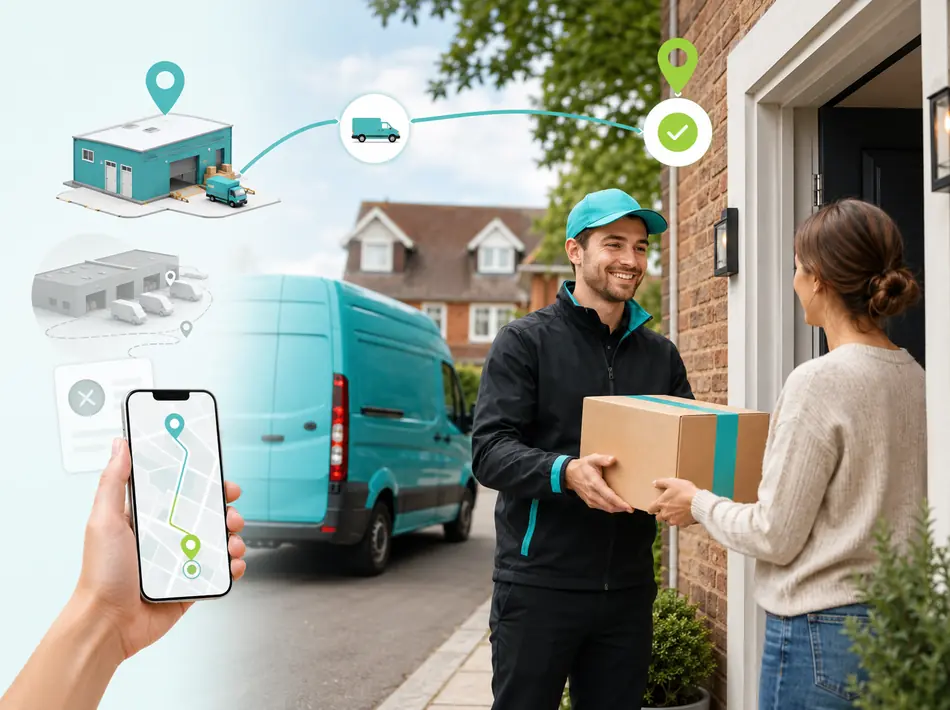
Someone places an order on your website at 9pm and expects it at their door within a day or two, maybe even hours. They never see your warehouse, your packing team, or your stock system. What they remember is one thing: whether the parcel turned up when you said it would. That final stretch is last-mile delivery, and for UK online retailers, it’s the stage that decides whether a customer buys from you again.
What Last-Mile Delivery Actually Involves
Last-mile delivery covers the final stage of the shipping journey: the point where a parcel leaves a depot, hub, or fulfilment centre and travels to the customer’s address. The name suggests a short hop, but that’s not always accurate. Depending on the operation, this stretch can run ten miles or a hundred.
Distance isn’t really what makes it hard. It’s the complexity: dozens of stops on one route, different access points, missed handovers, and real-time changes when a customer isn’t home. Your warehouse operations stay invisible to shoppers. The driver at the door is the only part of your delivery chain they ever see.
Why the Last Mile Costs More Than Any Other Stage
Ask most online retailers how much of their shipping budget the last mile eats up, and you’ll usually hear a guess of 20 or 30 percent. The real number runs a good deal higher, since labour, fuel, vehicle upkeep, and route planning all concentrate at this final stage.
A long-haul run moves one large load between two fixed points. Last-mile delivery does the opposite: dozens of individual stops, each needing parking, a handover, and proof of delivery. Multiply that by every driver on every route, and the cost per parcel climbs fast.
Online retail keeps growing too. The share of all UK retail sales made online reached 28.8% in May 2026, according to the Office for National Statistics, and every one of those extra online orders needs a last-mile delivery to finish the job. More orders online means more individual drops per round, which pushes cost per delivery higher still.
What a Failed Delivery Actually Costs You
A failed first attempt isn’t just an inconvenience. It means a re-delivery, a phone call to a frustrated customer, and driver time you’ve already paid for once. Worse, it might mean that customer doesn’t order from you again.
A government-commissioned evidence review into last-mile freight found that around one in seven online deliveries in the UK arrive late or when nobody’s in to receive them. That figure might look small, but multiply it across a growing online retail sector and it adds up to a serious operational cost, in re-delivery time, admin, and lost repeat custom.
If you’re shipping 300 orders a week, that failure rate works out to roughly 40 missed first attempts every seven days. Over a year, that’s thousands of re-deliveries, hours of wasted driver time, and customers who quietly switch to somebody else.
Shared Parcel Carrier or Dedicated Courier?
Most UK online retailers start out with a shared parcel carrier. Your parcel travels alongside hundreds of others, passes through a depot, and gets delivered whenever it fits the driver’s round.
For low-value, non-urgent items, that setup usually works fine. Problems start once you’re shipping serious volume, or once your customers start expecting more. Visibility disappears the moment the parcel leaves your hands. Depot delays happen often. And if something goes wrong, you’re talking to a call centre rather than someone who actually knows your business.
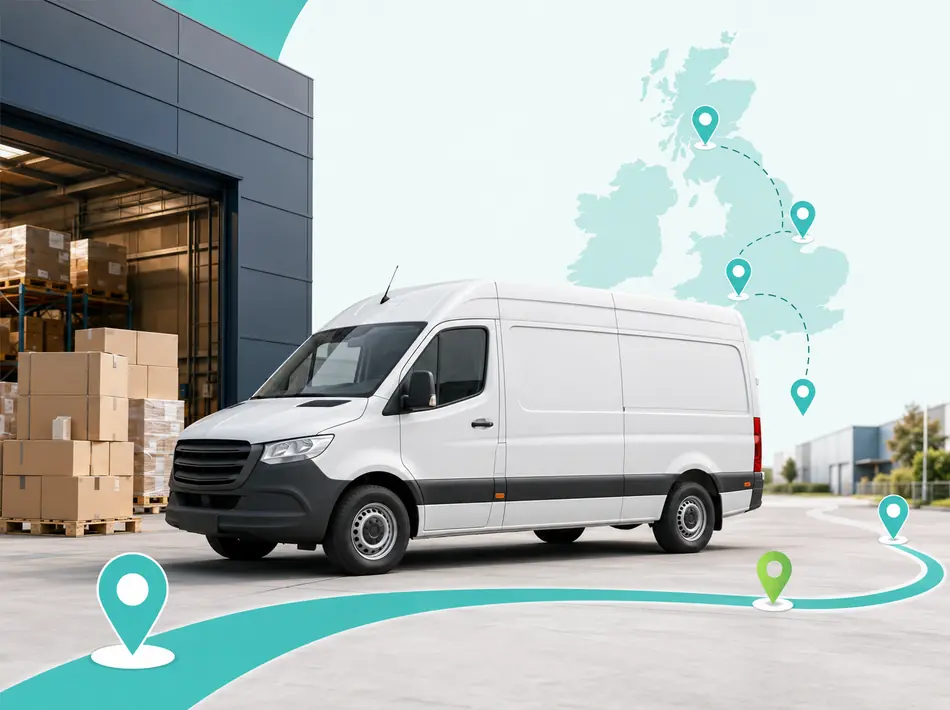
A dedicated same-day courier works differently. Your goods travel in their own vehicle, straight from collection to the customer’s address, with no depot stops and no other loads sharing the ride. Collection happens within the hour of booking, and the driver goes directly to your customer’s door.
For high-value orders, time-critical stock, or customers who expect fast, fully tracked delivery, that difference is the whole point.
Five Ways to Tighten Up Your Last-Mile Delivery
You don’t need to overhaul everything at once. A handful of practical changes can shift your first-attempt rate and improve how customers experience your brand.
Fix your address capture. A surprising number of failed deliveries trace back to a mistyped or incomplete address at checkout. An address validator is one of the cheapest fixes available, and it doesn’t require switching courier.
Give customers a delivery window. People are far more likely to be home if they know roughly when the driver’s arriving. Real-time tracking and SMS updates cut failed first attempts noticeably.
Match the service to the order. Standard, low-urgency parcels can travel with a shared carrier. Urgent orders, fragile goods, high-value items, and time-critical stock deserve a dedicated same-day or next-day courier with live GPS tracking and proof of delivery from collection through to arrival.
Use multi-drop delivery for regular local routes. If you’re delivering to the same areas week in, week out, a multi-drop delivery service brings your cost per delivery down and keeps your rounds manageable.
Set up a trade account. Shipping consistently? A trade account gets you faster booking, tech integrations, and priority collection. Flextro’s eCommerce fulfilment service is built for businesses that need dependable, repeatable delivery without signing up for a warehouse contract.
Frequently Asked Questions
Here’s what UK online retailers ask us most when they’re weighing up their delivery options.
What is last-mile delivery?
Last-mile delivery is the final stage of the shipping journey, the leg between a depot or fulfilment centre and your customer’s address. It’s the only part of your delivery chain your customer actually sees, and it shapes whether they order from you again.
Why does the last mile cost more than the rest of the delivery journey?
Labour, fuel, and the sheer number of individual stops all push costs up at this stage. A driver making thirty drops in a day spends far more time per parcel than a truck running between two depots, and every failed delivery adds fuel, driver time, and admin on top.
What’s the real difference between a shared carrier and a dedicated courier?
A shared carrier consolidates your parcel with hundreds of others and routes it through a depot. Dedicated couriers work the opposite way, sending one vehicle for your delivery alone, with no depot stops and no shared loads. That usually means faster delivery, better visibility, and fewer of the delays that depot networks create.
How can UK online retailers cut down on failed deliveries?
Start with accurate address capture at checkout, give customers a delivery window with live tracking, and use a courier with a strong first-attempt record. For time-critical or high-value orders, switching to a dedicated courier reduces the risk further still.
Is last-mile delivery the same thing as same-day delivery?
No. Last-mile delivery describes the final leg of any delivery, whatever the speed. Same-day delivery is a specific service where collection and delivery both happen within the same day. A dedicated same-day courier handles the last mile as part of that service, but the two terms aren’t interchangeable.
What should I look for in a last-mile courier?
Look for quick collection, live GPS tracking, proof of delivery, and clear pricing. Whether they use dedicated vehicles or shared loads tells you a lot about how much control you’ll have if something goes wrong, and how fast they’ll sort it out.
Getting Your Last Mile Right
Customer loyalty gets built, or lost, in that final mile. Getting it right isn’t about spending more money. It’s about matching the right service to each order and working with a courier that’s actually built for that last stretch.
Flextro collects from 95% of the UK within the hour, uses dedicated vehicles with live GPS tracking, and backs every delivery with an on-time or full refund guarantee. If your current courier keeps letting you down at the finish line, get a quote today and see what dependable last-mile delivery actually looks like.
Store and stockroom logistics differ from home delivery. Retail courier services covers inter-branch transfers and stock recovery.

Written by
Fabian Oliver — Content Writer, Flextro
Fabian is a content writer at Flextro, a UK-based dedicated courier and same-day delivery company. He writes clear, practical guidance on courier services, logistics, and delivery for UK businesses — from same-day and emergency deliveries to pallet freight, eCommerce fulfilment, and contract runs. Drawing on the expertise of the wider Flextro team, Fabian helps business owners make smarter, safer decisions about moving their goods, without the jargon.