Broken glass. A dented instrument panel. A luxury item that arrives in pieces. If you send fragile or expensive goods regularly, you already know the anxiety that comes with handing them over to a courier. The right preparation and the right service make the difference between goods that arrive safely and goods that arrive as a claim.
This guide covers what you need to know before booking, how to package your items properly, and why the type of courier service you choose matters far more than most people expect.
Why Fragile and High-Value Goods Need a Different Approach
Not all freight is equal, and couriers don’t treat it as such. A standard parcel service is built to handle volume. Your package joins thousands of others on a sortation belt, passes through multiple depots, and travels with goods from many different senders in the same vehicle.
That process works for a box of books. It’s not ideal for a medical device, a piece of automotive equipment, or an item worth several thousand pounds.
Fragile goods require fewer handling points, better vehicle choice, and often a more direct route. High-value goods also need a clear chain of custody, live tracking, and proof of delivery. These are the factors that separate a dedicated courier approach from a standard shared network.
The Biggest Risks to Fragile Goods in Transit
Multiple handling is the most common cause of damage. Every time your goods change hands, from the collection driver to a depot loader to a sortation belt to another vehicle, there’s another chance for something to go wrong.
Vibration is the second risk. Long journeys on motorways subject poorly packaged items to sustained movement. Without adequate cushioning, internal components shift, glass fractures, and delicate finishes scratch.
Poor load security matters too. In a shared van, your goods travel alongside other freight. If another parcel shifts during braking, it lands on yours. There’s no way to control that in a shared network. A dedicated vehicle removes most of these risks: your goods travel alone, in the vehicle they were collected in, with no intermediate transfers and no shared loading space.
How to Package Fragile Goods for Courier Collection
Good packaging is the first line of defence, whatever courier service you use. These steps make a real difference to whether your goods arrive undamaged.
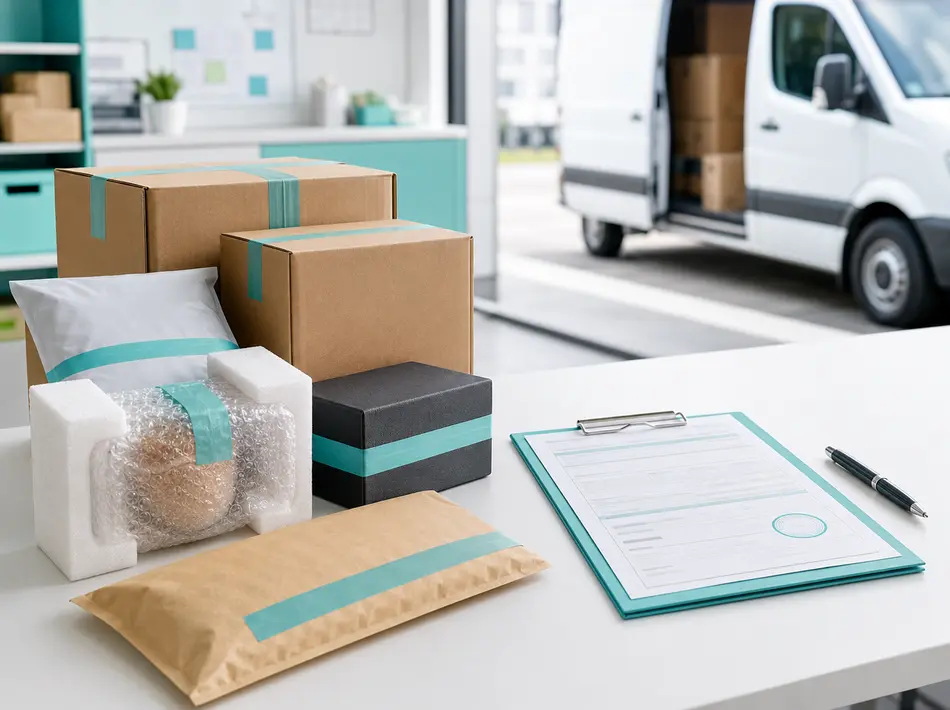
Double-box items where possible. Place the item in a well-fitted inner box with cushioning, then put that box inside a larger outer box with padding on all sides. The outer box takes the handling stress; the inner box absorbs any remaining impact.
Use the right cushioning material. Bubble wrap works well for impact protection, but it’s not enough on its own. Fill any empty space inside the box with foam, crumpled packing paper, or moulded inserts. Goods that rattle inside a box during transit will arrive damaged.
Reinforce all seams. Tape every edge and seam of the outer box with strong packing tape. A box that opens in transit is as bad as no box at all. Label the package on all four sides, mark it clearly as fragile, and include your contact number alongside the delivery address. If the package needs to stay upright throughout the journey, mark that too.
For very large, heavy, or irregular items, palletising your goods before collection is often the right call. Our pallet courier service is designed for exactly this type of freight, with dedicated vehicles and direct delivery as standard.
Choosing the Right Vehicle for Your Load
Vehicle choice is something most guides skip entirely. It matters a lot.
A Small Van or SWB is suited to smaller fragile items, such as electronics, artworks, or boxed instruments. An LWB or XLWB gives you more internal space for larger items or multiple packages travelling together. For heavy or bulky freight, a Luton van with a tail lift removes the need for manual lifting, which cuts the chance of damage during loading and unloading.
Matching the vehicle to the load means your goods aren’t crammed into a space they don’t fit, rattling around on a long haul. Ask your courier to confirm which vehicle will be used and why it suits your specific load.
Dedicated Courier vs Shared Van: Why It Matters for Fragile Freight
This is the most important decision you’ll make when sending high-value or fragile goods.
A shared van collects from multiple customers and delivers to multiple addresses. Your item shares space, and potentially shares impact, with other people’s goods. Cost is split, but so is control.
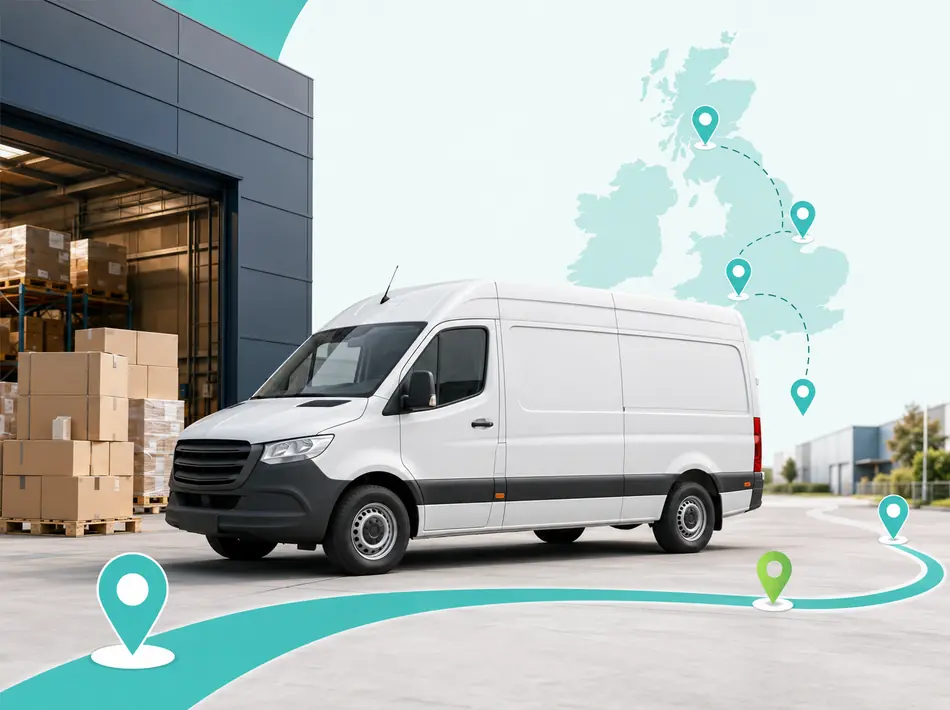
A dedicated courier vehicle carries only your freight. The driver collects from your address, loads your goods, and delivers them directly without any depot stops or vehicle changes. No one else’s parcel lands on yours. No transfer, no reloading, no sorting belt.
According to the Department for Transport, palletised goods accounted for 27% of all HGV journeys in the UK in 2025, reflecting just how much freight moves by road every day. When that freight is fragile, the handling method determines whether it arrives intact.
For urgent or same-day deliveries, Flextro’s same-day courier service operates 24 hours a day with collection within 60 minutes of booking, using dedicated vehicles on every job.
Industries That Regularly Send High-Value Freight by Courier
Healthcare and medical suppliers send diagnostic equipment, surgical instruments, and pharmaceutical samples that need careful handling and a documented chain of custody. Damage or contamination can have serious consequences, which is why dedicated vehicles with proof of delivery are the standard for medical freight.
Automotive and manufacturing businesses send engine components, precision-machined parts, and electronic control units that are fragile, expensive, and often production-critical. A delayed or damaged delivery can halt a production line, making speed and security equally important.
Legal and professional services firms send original signed documents, executed contracts, and property deeds. These aren’t physically fragile, but their loss or delay would be costly and potentially damaging to a client relationship. Flextro’s emergency courier service is regularly used for time-critical, high-stakes deliveries of this type.
Retail and eCommerce businesses sending luxury goods, high-end electronics, or bespoke items carry high replacement costs if something goes wrong. Returns and refund claims are expensive. Getting these items to the customer intact costs far less than the alternative.
What to Check Before Booking a Fragile Goods Courier
Ask whether the service uses a dedicated vehicle or a shared van. This single question matters more than any other for fragile freight. If the answer is shared, your goods will pass through multiple handling points before they arrive.
Confirm the tracking setup. Live GPS tracking from collection to delivery is standard with a quality dedicated courier. Milestone-only tracking (collected, out for delivery, delivered) doesn’t tell you where your goods are between those points, which isn’t much comfort if something goes wrong.
Check the proof of delivery process. For high-value goods, you want a signature and a time-stamped record. Ask whether the courier provides photographic proof of delivery.
Understand the liability terms. Most couriers offer declared value cover. Read the conditions around packaging standards before you book, because poor packaging is the most common reason a damage claim is rejected.
Ask whether the same driver completes the whole journey. In a dedicated courier arrangement, the answer should be yes. In a shared network, your goods transfer between drivers at each depot.
Flextro uses dedicated vehicles on every job, with live GPS tracking and proof of delivery as standard. The price quoted is the price paid.
Frequently Asked Questions
Can a standard courier handle fragile goods?
Standard courier services can accept fragile goods, but they route shipments through shared vehicles and multiple depot transfers. Each handling point increases the risk of damage. For genuinely fragile or high-value items, a dedicated vehicle that travels direct from collection to delivery gives you far greater protection and peace of mind.
What does a dedicated vehicle mean for fragile goods?
A dedicated vehicle carries only your goods for the entire journey. There are no depot stops, no transfers, and no other freight sharing the loading space. The same driver who collects your goods delivers them. It’s the most secure way to send fragile or high-value freight by road in the UK.
Do I need to declare the value of my goods before booking?
Yes. Always declare the full replacement value of the goods when booking. This ensures any liability cover reflects the actual cost if something goes wrong. Couriers may offer additional declared value cover for high-value shipments, so it’s worth asking when you request a quote.
What happens if my fragile goods are damaged in transit?
Report the damage at the point of delivery and photograph it immediately. Your right to a claim depends on the courier’s liability terms and how the goods were packaged. Adequate packaging is a condition of most courier liability policies, so proper preparation before collection is essential.
Can fragile items be sent on a pallet?
Yes, and palletising is often the better choice for large, heavy, or awkward fragile items. Proper pallet packaging, including sturdy outer boxes, foam cushioning, and thorough stretch-wrapping, keeps the load stable throughout the journey and reduces the risk of individual items shifting during transit.
How quickly can Flextro collect fragile goods?
Flextro collects within 60 minutes of booking from 95% of the UK, 24 hours a day, 365 days a year. If your goods are time-sensitive as well as fragile, same-day collection and delivery is available. Request a quote and we’ll confirm timing for your specific route and load.
Fragile and high-value goods need more thought than a standard parcel shipment, but the process doesn’t have to be complicated. Get the packaging right, choose a dedicated vehicle, and use a courier that gives you live tracking and proof of delivery. Those three things remove most of the risk.
Ready to book? Get a quote from Flextro and we’ll confirm the right vehicle for your load, with clear pricing and no hidden costs.
Two sectors send this most often: see technology and IT courier for laptops, servers and network kit, or event and exhibition courier for stands, AV and display pieces.

Written by
Fabian Oliver — Content Writer, Flextro
Fabian is a content writer at Flextro, a UK-based dedicated courier and same-day delivery company. He writes clear, practical guidance on courier services, logistics, and delivery for UK businesses — from same-day and emergency deliveries to pallet freight, eCommerce fulfilment, and contract runs. Drawing on the expertise of the wider Flextro team, Fabian helps business owners make smarter, safer decisions about moving their goods, without the jargon.