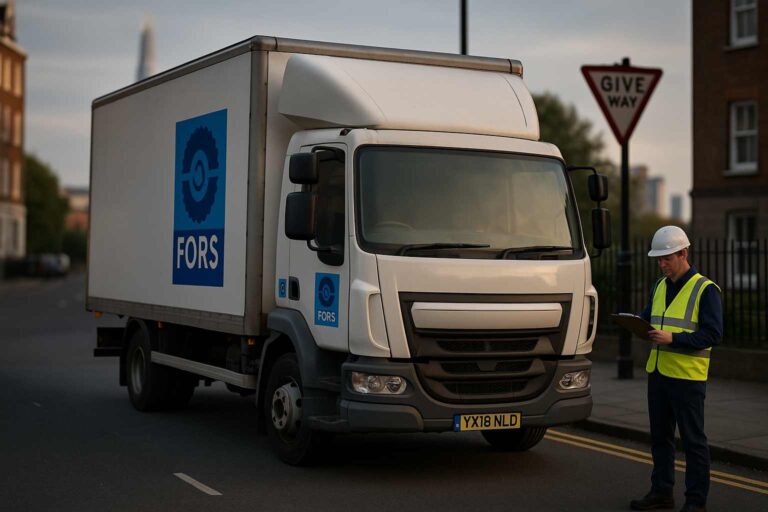
If you’re sending multiple parcels to the same address, you have four real choices: book each box as a separate parcel, combine them into fewer boxes, strap them onto a pallet, or put the lot in one dedicated van. The cheapest option depends less on how many boxes you have than on how big and heavy they are. The safest depends on how much it matters that every box turns up on the same day.
Most booking sites make the first option look like the only one, because they quote per box. That works well for two or three light parcels. It starts to cost you, in money or in missed deliveries, once the boxes get large, heavy or numerous. Below is where those lines fall, with the numbers that decide between them.
Options for sending multiple parcels to the same address
Here is how the four options compare.
| Option | How you’re charged | Arrive together? | Best for |
|---|---|---|---|
| Separate parcels on a network | Per box, on weight or volumetric weight | Not guaranteed. Each box is sorted on its own | Two to five small, light boxes with no fixed deadline |
| Fewer, larger boxes | Per box, but with fewer labels | More likely, with fewer pieces to lose track of | Light items that pack tightly with little empty space |
| One pallet | Per pallet, on size and weight | Yes. The load travels as one wrapped unit | Many boxes, or a total weight in the hundreds of kilograms |
| One dedicated van | Per journey, on route and van size | Yes. Loaded once, unloaded once | Mixed sizes, awkward shapes, a same-day deadline or valuable goods |
How do networks charge for several boxes?
A parcel network prices each box on its own. Book five boxes to one address and you get five labels, five tracking numbers and five charges, sometimes with a small discount for booking them together. The charge for each box is set by whichever is greater: what it weighs on the scales, or its volumetric weight.
Volumetric weight, worked through
Volumetric weight is how carriers charge for the space a box takes up rather than its mass. The usual formula is length × width × height in centimetres, divided by 5,000, which gives a figure in kilograms. DHL publishes exactly this method and bills on whichever of the two weights is higher. Some carriers divide by 4,000 or 6,000 instead, so check the figure for the one you are booking with.
Take a box measuring 60 × 40 × 40 cm. That is 96,000 cubic centimetres, which divides out to 19.2 kg. If what’s inside weighs 8 kg, say cushions or bubble-wrapped lampshades, you still pay for about 19 kg. Send ten of those and you are paying to move close to 200 kg, most of it air.
Dense goods work the other way. A 30 × 20 × 20 cm box of ceramic tiles has a volumetric weight of 2.4 kg but might weigh 15 kg on the scales, so it is charged on the 15.
Why one big box can cost more than three small ones
It is tempting to tape everything into one large carton to save on labels. Two things can make that backfire.
A bigger box usually holds more empty space, which pushes up the volumetric weight. And you can cross a size or weight band. At the time of writing, a medium parcel on Royal Mail’s Tracked 48 service can be up to 61 × 46 × 46 cm and 20 kg, and anything heavier has to go with Parcelforce or another courier. Most UK parcel networks stop at around 30 kg per item, and many add a surcharge for oversized or awkwardly shaped boxes well before that.
So combine only when the items pack tightly. If combining leaves gaps that need filling, you are likely to pay more, not less.
Will all the boxes arrive on the same day?
On a parcel network, not necessarily. Each box carries its own barcode and is scanned, sorted and loaded on its own. The boxes might leave your premises together and travel on the same lorry between depots, but one that gets misrouted, misses a connection or is pulled aside for a damaged label carries on without the others. Nothing in a standard parcel booking ties the pieces together physically.
For plenty of senders that doesn’t matter. A customer who gets two boxes of stationery on Tuesday and the third on Wednesday is unlikely to complain.
It matters a great deal when the boxes only work as a set. A flat-pack wardrobe missing the box with the fixings. Exhibition stand panels without the frame. A kitchen fitter on site, paid by the day, waiting for the last carton of worktop brackets. In those cases a split delivery can cost more than the whole shipment did, in wasted labour and a second visit.
If arriving together is the whole point, choose an option where the load moves as one: a pallet, or a single vehicle that is loaded once at your door and unloaded once at the destination.
When combining boxes into one makes sense
Combining works best for light, dense items that pack without gaps: printed leaflets, small parts, folded textiles. Fewer pieces means fewer chances for one to go astray, fewer labels to print and fewer scans to check.
Watch the weight as you pack. A heavier box is not just dearer to send, it is harder to handle safely at both ends. The Health and Safety Executive’s guidance on manual handling uses a lifting filter of 25 kg for men and 16 kg for women, and that is for a load held close to the body at about knuckle height. Lift from the floor, reach out or twist, and the figures drop sharply. They are not legal limits, but they are a fair guide to what the person at the other end can manage.
A few things to get right when you combine:
- Use a box made for the weight. Double-walled cardboard for anything heavy.
- Pack the heaviest items at the bottom and fill the gaps so nothing shifts.
- Don’t overfill. A bulging carton won’t stack and is more likely to split along a seam.
- Weigh and measure the finished box before you book, not after you’ve printed the label.
When it’s time to put the boxes on a pallet
Once you have more boxes than you would happily carry from a van, or a total weight in the hundreds of kilograms, a pallet usually beats a stack of individual parcels. The boxes are wrapped into one unit, travel as one and are unloaded in one go. You pay one charge for the pallet rather than one per box, and the boxes physically cannot be separated in transit.
Pallets bring their own requirements. Someone at the delivery end needs a way to move one: a pallet truck, a forklift, or a vehicle with a tail lift and level ground to roll it across. The load also has to be built properly, with heavy boxes at the bottom, nothing hanging over the edges and enough stretch wrap to hold it together. Our guide to preparing a pallet for courier collection covers that step by step.
If you are still deciding whether a pallet is worth it, we compare pallet delivery with parcel couriers in more detail, including where the weight lines usually fall. When you are ready to book, our pallet delivery service collects from your premises and delivers direct.
When one dedicated van is the sensible choice
A van booked for your delivery alone sidesteps most of the problems above. There is no per-box pricing, no volumetric weight and no sorting depot, because the boxes go from your door to the destination in the same vehicle. You pay for the vehicle and the journey, not for each item in it.
It tends to be the right call when:
- the boxes are different shapes and sizes, or some are too long or heavy for a parcel network
- they have to arrive together, on a particular day
- the contents are valuable or fragile and you would rather they were handled as little as possible
- someone is waiting on site to receive or fit them
Picking the van is simpler than it sounds. As a rough guide, a short wheelbase van takes up to about 800 kg and two pallets’ worth of floor space. Our guide to choosing the right courier van size goes through all five, and our van courier service matches the vehicle to the load when you book. If it all has to be there today, a same-day courier collects and drives straight to the address, where the route and timing allow.
How to label and track a multi-box delivery
However you send them, ten minutes of organisation at the packing stage saves a phone call later.
Number every box. Write “1 of 4”, “2 of 4” and so on next to the label, so whoever receives them can see straight away if one is missing.
Put the same reference on every box. An order number, a job number or the recipient’s name. If a box does get separated, a depot or driver can match it back to the rest.
Put a contents list in box 1 and keep a copy yourself. It answers the “which box has the fixings?” question before anyone has to open six of them.
Photograph each box once it’s sealed and labelled. If one goes missing or arrives damaged, you have a record of how it left.
Ask for the piece count on the proof of delivery. A signature tells you someone took delivery. A signature against “4 boxes received” tells you they all arrived.
Questions about sending several parcels
Is it cheaper to send one big box or several small ones?
It depends on how well everything packs. If the items fill one box with little empty space and it stays inside the carrier’s weight band, one box is usually cheaper. If combining leaves gaps or takes you over 20 or 30 kg, several smaller boxes often cost less, because volumetric weight and heavy-parcel surcharges add up quickly.
Do I need a separate label for every box?
On a parcel network, yes. Each box is tracked and sorted individually, so each needs its own label and barcode, even when you book them as one order. A pallet carries one set of labels for the whole load, and a dedicated van is booked as a single job, though numbering the boxes is still worth doing.
Can I make sure all my parcels arrive on the same day?
Not on a standard parcel network, where each box travels on its own and can be separated at a depot. If arriving together matters, put the boxes on a pallet or book a dedicated vehicle, so the whole consignment is loaded once and delivered in one drop.
What’s the heaviest box I should send?
Most UK parcel networks accept up to about 30 kg per item, and Royal Mail’s standard parcels stop at 20 kg. Being accepted is not the same as being easy to carry, though. HSE guidance puts a low-risk lift below 25 kg for most people in most positions, so splitting very heavy loads, or using a pallet, is kinder to whoever unloads them.
Is sending to one address the same as multi-drop delivery?
No. Multi-drop means one vehicle making deliveries to several different addresses on a single route, which suits wholesalers or anyone supplying a list of customers. Several boxes to one address is a single delivery with more than one piece in it. If you do have a list of addresses, our multi-drop courier service is set up for exactly that.
In short
For two or three light boxes with no hard deadline, separate parcels on a network are usually fine, and usually the cheapest. Combine items only when they pack tightly and stay comfortably under 20 kg. Once the boxes are numerous, heavy or need to arrive together, a pallet or one dedicated van often works out cheaper as well as safer, because you stop paying per box and stop relying on every piece making every connection.
If you have several boxes going to one address, request a quote with the number of boxes, their rough sizes and the total weight, and we will match the load to the right vehicle.

Written by
Fabian Oliver — Content Writer, Flextro
Fabian is a content writer at Flextro, a UK-based dedicated courier and same-day delivery company. He writes clear, practical guidance on courier services, logistics, and delivery for UK businesses — from same-day and emergency deliveries to pallet freight, eCommerce fulfilment, and contract runs. Drawing on the expertise of the wider Flextro team, Fabian helps business owners make smarter, safer decisions about moving their goods, without the jargon.